10/22/22

Sidney woodworking students craft Halloween spirit

Sidney woodworking students craft Halloween spirit

Seventh grade students at Sidney got into the Halloween spirit recently and advanced their woodworking skills by making solar powered pumpkins.

Sidney woodworking instructor Shawn Thompson explained that the project allowed his students to learn how to use a bandsaw.

The students had to come up with their own pumpkin design.

With material cost being high, Thompson explained that the students had to be resourceful. Students were able to utilize used sheets of plywood from other projects as well as some scrap boards from the school’s scrap bin to create the stands for the pumpkins to sit on.

The students also learned how to use a drill press and palm sanders as well and did finishing work by staining or painting their projects, Thompson said.

“This project idea is one I have used for a couple years now,” Thompson said. “I guess it started out as a beginner’s band saw lesson. It always falls during the fall season, so I figured why not make it a fall project and relate it to the season.”

The only costs to the kids for this project were $1 each for the solar powered lights that were placed in a hole drilled out on the backside of the pumpkins.

These pumpkin projects will sit in windows or on ledges or porches soaking up the sun and then come to life during the dark evenings.

“This has been one of my favorite wood projects for the students to do as they get to use new skills and their own creativity,” Thompson said. “(It) Seems to also be a favorite of students and their families.

The ability to do projects always comes down to the availability of materials.

“We are always accepting any donations of lumber or materials for our woods shop classes,” Thompson said .

The World's Largest Collection of 16000 Woodworking Plans!

Woodworking wonder: Brainerd teen turns hobby into business

Woodworking wonder: Brainerd teen turns hobby into business

Brandon Eberts began woodworking with his grandpa and now at 16 runs his own business, Lakeland Woodsmith.

Boy sits in woodshop, sanding down door
Brandon Eberts sands down a door Friday, Sept. 30, 2022, at Great River Door Co. in Brainerd. The job has helped Eberts develop skills he uses in his own woodworking business, Lakeland Woodsmith.
Theresa Bourke / Brainerd Dispatch
We are part of The Trust Project.

BRAINERD — There are barely enough hours in the day and days in the week for Brandon Eberts to keep up with all of his responsibilities and activities.

A sophomore at Brainerd High School, Brandon works at Great River Door Co. after school on days he isn’t sailing and devotes his weekends to Lakeland Woodsmith. The unique part about the last venture is that Brandon can call it his own. Last summer, at just 14 years old, the teen started his own woodworking business.

“It does get a little overwhelming sometimes,” Brandon said during an interview Sept. 30. “But I can handle it usually.”

Now, after just turning 16 last week, Brandon is busier than ever, creating custom cutting boards, signs, cribbage boards and other items for his customers.

As he acquires more tools to add to his store of saws, laser engraver, lathe, joiner, planer and sanding equipment, he hopes to increase his product offerings.

ADVERTISEMENT

“I would love to do bigger custom orders, like tables — coffee tables, dining tables, side tables — all that sort of basic furniture, but then kind of put a twist on it and make it unique,” he said.

After winning money at a recent statewide business competition, Brandon is on track to do just that.

Boy stands next to handmade wooden items
Brainerd High School sophomore Brandon Eberts stands next to a display of handmade wooden items at the 2022 MN Cup, put on by the University of Minnesota Carlson School of Managament. Eberts earned second place in the competition and secured $5,000 for his woodworking business, Lakeland Woodsmith.
Contributed

The MN Cup, hosted by the University of Minnesota Carlson School of Management, is a community-led, public-private partnership supporting entrepreneurs. An annual competition connects those starting their own businesses with educational opportunities, mentors and support to launch and further develop their ventures.

Brandon entered the youth division of the MN Cup this past summer and found himself presenting business plans and pitch decks, creating videos and getting the word out about his brand. After months of work and presentations, the teen came out in second place, earning $5,000 to invest in Lakeland Woodsmith.

“It’s really gonna allow me to grow from it,” Brandon said, as his busy schedule with school, work and extracurriculars makes it tough to invest as much time and money into his business as he would like.

But his job at Great River Door in Brainerd, along with other community connections, is also part of what makes Lakeland Woodsmith possible.

Advice on things like pricing and marketing came from Brent Manley, owner of Great River Door, while Chris Smith at Minnesota Makerspace in Brainerd has been a fountain of knowledge in areas like laser engraving. The businesses also provide him with more space to work and equipment to use when he needs it.

Man stands with wood carved door
Brent Manley, owner of Great River Door Co. in Brainerd, shows off a carved work Friday, Sept. 30, 2022.
Theresa Bourke / Brainerd Dispatch

“He just has that interest and desire to create things,” Manley said. “He’s always looking for new ideas.”

ADVERTISEMENT

But Brandon’s first mentor was someone much closer to home.

“I started with my grandpa,” he said. “He bought me a set of tools, and we started building things together — deer stands, signs, little shelves, basic stuff.”

Then in middle school, he discovered STEM classes and developed an aptitude for the science, technology, engineering and math fields. One specific class really piqued his interest as he learned how to use a laser engraver and computer numeric control machine while working with wood.

“After that, I realized it could be profitable because we made a sign — a Minnesota sign — and some people offered me a few hundred bucks for it,” Brandon said. “So I was like, ‘Oh, I could start doing this to make money.’”

It was a move that made his parents a little hesitant at first, but now Matt and Deb Eberts couldn’t be prouder of their son.

“Once he puts his mind to something, he’s off to the races,” Matt said. “And I’ve really lucked out that he’s chosen to put his mind to positive things.”

His son has always been a kid with big ideas, incapable of thinking small. So once the teen came up with his business idea, it was on him to do all the work.

“I said, ‘Look, if you want to pursue this, that’s awesome. You know, we’re going to offer what support we can, but this is you. This is your thing, and you’re going to have to study it. You’re going to have to research it. You’re going to have to do the work if you ever intend to sell things,’” Matt said.

ADVERTISEMENT

Boy stands next to sign reading "MN CUP"
Brainerd teen Brandon Eberts poses next to a sign at the 2022 MN Cup, a program for entrepreneurs hosted by the University of Minnesota Carlton School of Management.
Contributed

And Brandon did just that.

Reaching out to local business owners, finding inspiration from former teachers, leaning on his grandpa’s wealth of knowledge and his parents’ support, Brandon cultivated an enterprise all his own.

“People have been so amazingly generous with recognizing his excitement and seeding it in a healthy way,” Matt said.

Brandon is grateful for support, too, knowing his success wouldn’t be possible without it, and encouraging other kids with big ideas to follow the same path.

“You’ve got to find someone who knows what they’re doing — some mentor or some business owner, family member — someone who’s had experience in that and just talk to them,” Brandon said.

More by Theresa Bourke

Brandon’s Lakeland Woodsmith website is a testament to that kind of mentorship, complete with photos of his completed and customized cutting boards, serving boards, charcuterie boards, signs and luggage tags, all made with the care and precision customers can expect from a professional.

And if a product doesn’t come out exactly how Brandon envisioned, there’s a good chance it will end up in his parents’ or grandparents’ house, a shining reminder of what hard work, a determined mind and a little encouragement can accomplish.

THERESA BOURKE may be reached at theresa.bourke@brainerddispatch.com or 218-855-5860. Follow her on Twitter at www.twitter.com/DispatchTheresa .

The World's Largest Collection of 16000 Woodworking Plans!

SCOW hosts Home Depot woodworking event for Wallingford kids

SCOW hosts Home Depot woodworking event for Wallingford kids


Peggy O’Connor helps her son, Nico O’Connor, and daughter, Isabel O’Connor, build their wood sets at The Home Depot and SCOW event. David Matos, Record-Journal

Facebook Twitter LinkedIn Pinterest

WALLINGFORD — Sounds of hammering and laughter echoed while children and their families put together do-it-yourself wood kits at the Spanish Community of Wallingford (SCOW), in partnership with The Home Depot.

In celebration of Hispanic Heritage Month, the mega store hosted a woodworking activity at the non-profit organization on Saturday. Like most SCOW events, the activity was completely free for children up to 12 years old.

According to Jonathan Wilder, operations manager for the North Haven location of The Home Depot, every month the company celebrates a topic involving diversity, equity and inclusion (DEI).

“We were looking to see how we can tie what we talk about in our stores with DEI through the community,” Wilder said.

The store also has a community program called Team Depot where employees of different store locations volunteer on local projects for the community. Volunteers representing different stores in surrounding towns participated in the workshop, including associates from North Haven, Orange, East Haven, Trumbull and Bridgeport.

“We thought it’d be a cool chance to bring that out into the Hispanic community and really get to know the community around here,” Wilder said. “But also have a chance for our associates to be involved in something that’s important to the Hispanic heritage.”

The Home Depot hosts a kids’ woodworking workshop in its stores every first Saturday of the month. This year marks the 25th anniversary of the initiative.

“I think it’s awesome just for us to partner (with SCOW) because just for the kids to do something positive and not negative and just to have a different mindset on everything,” said Jacqueline Andel, a Home Depot volunteer. “That’s what we provide for the community, to uplift and not be negative or anything like that. That’s mostly what it’s about, (providing) a positive setting for the kids.”

Andel explained that this event provides a haven for the children of the Wallingford community to practice their endurance by putting together a substantial product made of wood that they can take home and use.

“Well, if they want to be a builder, this is the start,” Andel said. “This is an opportunity to see what it’s about, even if it’s just like a little toy or something like that, it’s a start in their brain to do something more with their life and when they get older.”

Parent feedback

Parents and their children were greeted by the smiling faces of the volunteers and a table decorated with orange aprons for the children to wear during the activity.

The children had three wood kits to choose from — a race car, a mini pottery bench and a fire boat, in recognition of October being Fire Safety Month.

Former executive director of SCOW Maria Harlow brought her daughter, Fiona Harlow, to the workshop, not only because of her previous involvement with SCOW but because she thought it was special that The Home Depot was sharing the activity with the community during Hispanic Heritage Month. Maria Harlow is the currect executive director of the Meriden-Wallingford United Way.

“It is wonderful to bring opportunities to connect the community with different activities that are available in the town,” she said. “This one, in particular, I love because it’s hands-on so the children enjoy it very much. I also love to see how businesses that our communities support and our communities buy things from offer this activity for the children. I think it is very exciting.”

Rocio Piña, alongside her husband, brought her two daughters, Helene and Emilie Piña because she wanted to do something as a family, learn with the community and do an activity that can help their children in the future.

“It just helps with meeting with other kids and learning other things besides your daily routines,” Rocio Piña said. “This activity also helps them communicate better with others.”

Peggy O’Connor stopped by with her daughter, Isabel O’ Connor and son Nico O’Connor on their way to a robotics class in the SCOW building, because a friendly volunteer asked if they wanted to join, and having experienced the in-store kid’s workshop at Home Depot before the pandemic, they couldn’t say no.

“My kids love it and I’m Hispanic so why not,” Peggy O’Connor said. “They love the hands-on, getting to hammer, getting to build. They love it and they feel like they’re making something.”

Back to Basics: Woodworking Safety

Back to Basics: Woodworking Safety

Back to Basics is a weekly feature that highlights important but possibly overlooked information that any EHS professional should know. This week, we examine OSHA’s standards for woodworking safety.

Woodworkers can be found in a number of different industries. According to the Bureau of Labor Statistics (BLS), most woodworkers are employed in manufacturing industries, and they are responsible for making a variety of products, such as cabinets and furniture, using wood, veneers, and laminates. Working conditions vary, but many woodworkers are exposed to hazards such as machinery noise and wood dust. According to OSHA, woodworking operations can be hazardous, especially when machines are used improperly or without proper safeguards.

The guidelines for woodworking can be found in OSHA’s standards for general industry, specifically in the subparts for walking and working surfaces, ventilation, occupational noise exposure, hazardous materials, personal protective equipment (PPE), lockout/tagout, powered industrial trucks, and machinery and machine guarding.

Hazards

Woodworkers operating equipment often suffer injuries such as laceration, amputation, severed fingers, and blindness, according to OSHA. They face machine hazards at the point of operation and when there are pinch points and rotary and reciprocating movements. Workers also deal with kickbacks, flying chips and materials, tool projections, fire and explosion hazards, and electrical hazards.

OSHA provides two examples of potential woodworking machine hazards. If not properly grounded, the metal framework of a circular saw could become energized and possibly electrocute and employee. If a worker’s hands were to contact a saw blade, they could have one or more fingers cut off.

Woodworkers face health hazards such as skin and respiratory diseases due to working with wood dust and chemicals used for finishing products. OSHA says most health hazards are associated with long-term exposure to certain substances or to excessive noise levels or vibrations. Some kinds of wood dust can cause allergic reactions, and saw dust is a group A carcinogenic.

Finishes, coatings, adhesives, and solvent vapors can contain chemicals that affect the central nervous system, which can cause headaches, nausea, and dizziness. Exposure to turpentine can result in temporary irritation of the eyes and skin, and even kidney and bladder damage.

Equipment hazard solutions

Employers can implement several procedural and administrative controls in order to protect their workers from equipment hazards, according to OSHA. Workers should be using appropriate equipment for the job, and only using machines for work within the rated capacity specified by the machine manufacturer.

Employers should train workers on machine use and allow only trained and authorized workers to operate and maintain the equipment. Workers must be able to understand the purpose and function of all controls on the machine, how to stop the equipment in an emergency, and the safety procedures for special set-ups. OSHA says operator training should include hazards associated with the machine, how the safeguards protect workers from the hazards, the circumstances under which the guard can be removed, and what to do if the guard is damaged or not functioning properly.

Managers should inspect the equipment and guards frequently to ensure that the operator and machine are equipped with the safety accessories of the job, the machine and safety equipment are in proper working condition, and the machine operator is properly trained. The inspections must be documented, and the documentation should identify the machine, inspection date, problems noted, and corrective action taken.

Equipment must only be used when guards are in place and in working order, and when guards cannot be used, combs, featherboards, or suitable jigs for holding the stock must be provided. Employees must be provided with push sticks or other hand tools so that their hands are away from the point of operation when they work on small pieces of stock.

Electrical hazard protection

All electrical installations must comply with OSHA’s electrical standards, including the following requirements. All metal framework on electrically driven machines must be grounded, including the motor, motor casing, legs, and frame. All circuit breakers and fuse boxes must be labeled to indicate their purpose, and electrical cords, cables, and plugs must be kept in good repair.

Junction boxes, outlets, switches, and fittings must be covered, and all electrical components must be approved by a Nationally Recognized Testing Laboratory. All machines must have a main power disconnect for lockout/tagout.

Additionally, according to OSHA, all machines should have:

  • A magnetic switch or other device to prevent an automatic restarting of the machine after a power failure.
  • An emergency stop device within reach of operators working in the normal operating position.
  • Clearly marked controls that are within easy reach of the operator and away from the hazard area.

Wood dust

Employers can protect workers from wood dust using local exhaust ventilation (LEV), which removes dust at or near the source. According to OSHA, LEV systems can often be integrated with machine guards. Exhaust hoods must be located as close as possible to the emission source, either on the woodworking machinery itself or near the machine. The local exhaust systems must also have an efficient air cleaning device.

LEV systems must be maintained by checking and cleaning ducts and dust collectors at regular intervals. The ducts must be inspected to ensure that they are not loose, broken, or damaged, and V-belts need to be checked on the drive units of belt-driven exhaust fans for slippage or breakage. OSHA provides a list of LEV recommendations for individual machines, including circular saws, band saws, jointers, shapers, planers and moulders, lathes, sanders, and routers.

Noise and vibration

Volume and duration are the primary factors that determine if noise is hazardous. The longer the duration and the louder the noise, the greater potential for hearing loss. Employers can reduce noise levels through three basic approaches to controlling noise:

  • Noise source controls
  • Noise path controls
  • Hearing protection

Noise source controls provide the most effective means of protection, since they actually reduce the amount of noise generated in the workplace, OSHA says. After exhausting source control options first, employers should turn to path controls, and then finally, hearing protection devices.

For vibration hazards, vibration isolators or damping techniques on equipment offer the most effective protection. OSHA recommends isolating machine vibrations from the surface if it is mounted or by use of vibration isolation mounts. Vibrating panels of machine housings and guards can be controlled by applying effective damping materials, such as felts, liquid mastics, and elastomeric damping sheets, to the panels.

A knowledgeable person should determine the correct type and quantity of damping material to use for a particular machine. Factors to consider include the frequency emitted by the machine, the noise reduction level desired, and the weight and size of the machine. OSHA says a good rule to follow is that the damping layer should be the same thickness as the surface being treated.

The World's Largest Collection of 16000 Woodworking Plans!

Patt went from being the only woman in her 80s woodworking class, to mentoring others in Mullumbimby

Patt went from being the only woman in her 80s woodworking class, to mentoring others in Mullumbimby

A black and white photograph of a woman in a knit sweater holding up a piece of wood.
Patt Gregory learning woodwork in the 1980s in Bristol, UK.(Supplied: Patt Gregory)
Share
  • Patt Gregory's first experience woodworking was with other women in a Bristol lounge room in 1986. She's been chasing that feeling ever since.

    "I'd been working in the UK as a private detective trying to get some sort of zhoosh into my life, some excitement," Patt says. 

    "But it didn't quite do it for me.

    "I saw an ad in the Bristol Evening Post that said 'woodwork for women'."

    An old black and yellow pamphlet advertising a free woodwork course for women.
    A pamphlet for free woodworking classes in Bristol in the 1980s. Free childcare provided for a six week course.(Supplied: Patt Gregory)

    Brought up on a farm with two brothers, Patt who is aged 70, didn't get much of a chance to do the exciting things they did.

    "I thought 'Oh, this would be amazing. I'd love to do something like this'," Patt says.

    "So I went along and it was in a lady's lounge room on the first floor of her little flat."

    She recalls the amazing sensation of the smell of wood, and the calmness of the women.

    "And I just fell in love with it and then wanted to train as a carpenter joiner.

    "I went home to tell my flatmates and … they all fell about laughing."

    An old photograph of three women huddled in a small room making adjustments to wooden features.
    Patt Gregory first learned woodwork around other women.(Supplied: Patt Gregory)

    Not an easy start

    The training back then was government funded — a three year apprenticeship packed into an intensive workshop.

    "I was in that workshop with six or seven lads. I was 30 and they were sort of all in their early 20s," Patt says. 

    "But I wasn't very good at it, I found that I struggled with the tools and the measuring and marking out and the boys seemed to get it after about three weeks.

    "When they'd go to morning tea, I'd have a bit of a cry. Because I really didn't know what was going on."

    Regardless, she pushed through, learning everything from stair casing and roofing to door making and fitting.

    Getting started

    Soon after graduating she started teaching others at a government-funded workshop to get women into trades.

    "That's been my passion ever since. I came back to Australia and started a business and that was it," Patt says.

    An old sepia image of a woman in an apron standing on a ladder by a house being built.
    Patt Gregory constructing a roof in the UK in the 1980s.(Supplied: Patt Gregory )

    Over the course of 26 years she's taught thousands of women the basics of woodworking and power tools from her home in Mullumbimby, in the Northern Rivers region of NSW.

    "They come because they love wood. That is the stitch that binds them all together. That is the base thing that everyone agrees on," Patt says.

    "[And] they just want to be able to build stuff. How things go together, how to buy wood."

    A woman wearing jeans, a white t shirt and glasses holds up a hand saw.
    Patt Gregory teaching woodworking from her Mullumbimby home, New South Wales. (Supplied: Patt Gregory)

    "They're sick of asking their hubby or their partner to make the coffee table or do this or that."

    She finds people want to get out of their heads and into working with their hands.

    A lot of the training is offering those nuances and subtleties that Patt missed out on.

    "When things are broken down into small steps, you feel like you can absorb it, and you don't walk away overwhelmed."

    Six women stand outside in a lush tropical setting holding up wooden framework, smiling.
    Patt Gregory with some of her many students. Not a bad view from the workshop.(Supplied: Patt Gregory)

    It's a style student TJ Rowan, has appreciated.

    "The way she teaches is very empowering. She doesn't assume any kind of knowledge," TJ says.

    "She tells you the absolute basics like on the hand position and your body position when holding a drill."

    TJ did come with some experience, having assisted her dad renovate houses as a kid.

    "Even though I had confidence around the tools there was this big gap in knowledge," TJ says.

    A woman stands at an outdoor workbench holding a drop saw machine, smiling.
    TJ has refound her love of woodworking, largely thanks to Patt.(Supplied: TJ)

    "When she shows you how to use a tool she never takes it all away from you. You're really quite empowered because you've always got the tool in your hand.

    "She's a real cheerleader. That's her personality."

    The World's Largest Collection of 16000 Woodworking Plans!

    Mentoring TJ

    TJ picked up Patt's course when she moved from Sydney to the Byron Bay region six years ago.

    "I ended up getting a job with a painter, so I was around other trades. And I was really drawn back to woodworking," TJ says.

    "And I wanted to learn from a woman, I thought it would be nice."

    After attending a few workshops, TJ's now setting up her own woodwork school with Patt's help.

    More opportunities to get into the trade

    Patt says she's seen the industry evolve since the 80s, particularly in terms of female representation across the trade.

    "In the 60s and 70s women were on front covers of handyman magazines. They admittedly often had a paintbrush in their hands, but at the same time they were very much part of doing a home," Patt says.

    "And of course women were so prolific in the war effort but that all got shoved under the carpet as soon as the lads came home."

    An older woman sits on an elevated wood beam in a house structure, smiling.
    At 70, Patt hasn't lost her love of woodworking.(Supplied: Patt Gregory)

    Now, things are changing.

    "It feels like we have an equal footing in that we have the opportunity to go into the trades. And it's our job to really push through," Patt says.

    "So we want women to come and learn woodwork. We want women to think about it as a trade and build houses and tiny houses and chook sheds."

    It's a desire that is out there, as TJ keeps finding.

    "There seems to be a lot of women who want to get into [it] but for whatever reason don't. Maybe it's fear or a gender role thing, they feel like it's unavailable to them. But it's not."

    The World's Largest Collection of 16000 Woodworking Plans!

    10/21/22

    Free cutting-edge education sessions ready to take the SIBO Live stage

    Free cutting-edge education sessions ready to take the SIBO Live stage
    October 20, 2022 | 4:15 pm CDT

    SIBO attendees and exhibitors are invited to participate in the eight free business management and technical sessions that will be held right on the show floor throughout the three-day event.

    French flag

    DRUMMONDVILLE, Quebec -- Salon Industriel du Bois Ouvré (SIBO), a trade event exclusively created for the Quebec wood industry, will feature eight free business management and technical presentations.

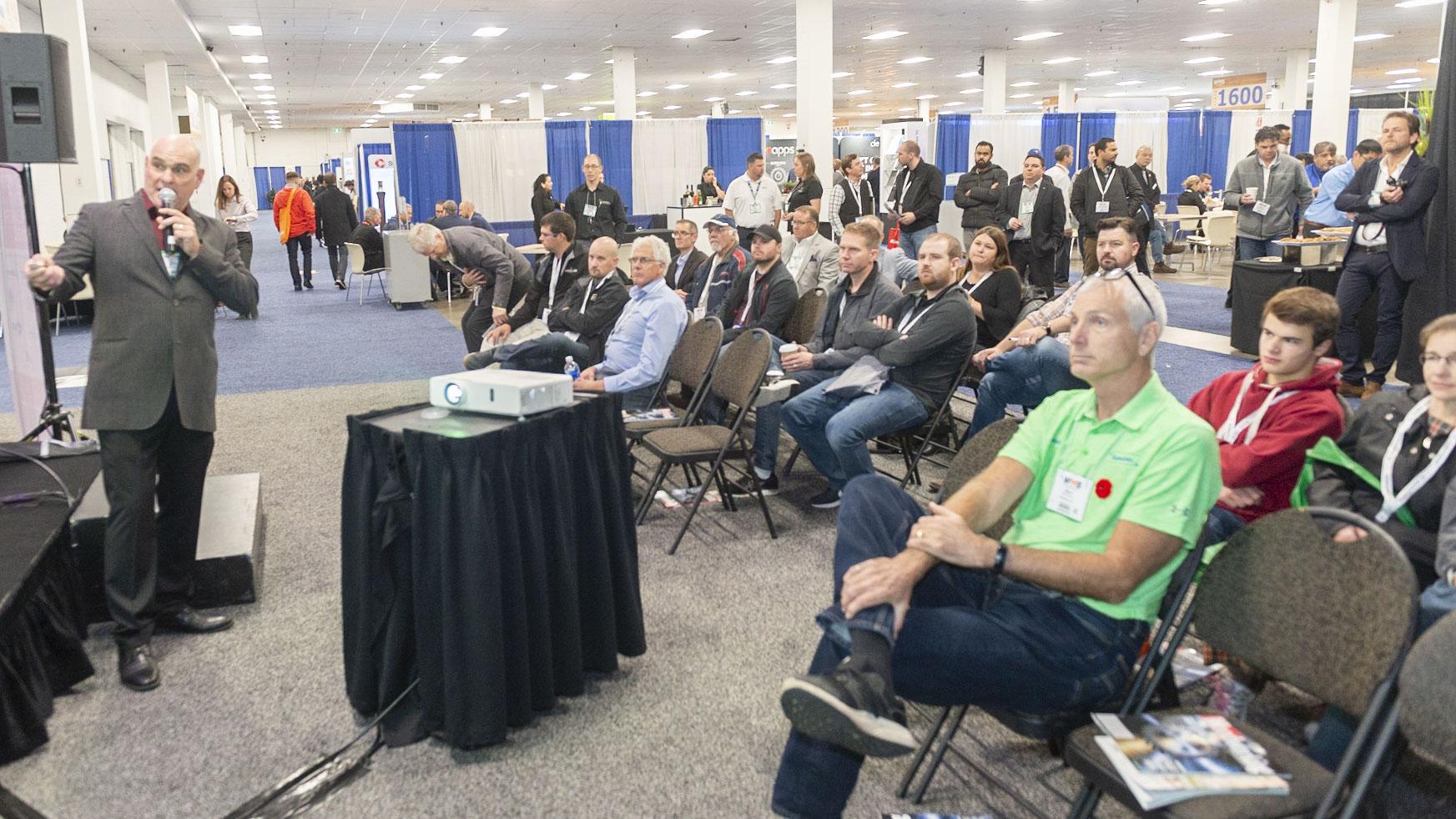
    Each of the educational sessions, including daily keynotes, will be presented at the SIBO Live stage right on the show floor throughout the three-day event, October 27-29 at the Centrexpo Cogeco.

    Bastien Larouche Roboistic RMC
    Bastien Larouche, founder and CEO of Roboistic, will deliver a free keynote presenation at 11:00 a.m. Friday at SIBO Live.

    Topics include a labor market trends and adoption of Industry 4.0 in Quebec, robot-made cabinetry, water-based finishing, choosing a CNC machine, and an explanation of key updates to North American-wide architectural woodwork standards. 


    SIBO LIVE SCHEDULE

    THURSDAY, OCTOBER 27

    11:00 -- Keynote: Adoption of Industry 4.0 by Quebec Wood Products Manufacturers

    Presenter: Christian Galarneau, Sectoral labor committee for the door and window, furniture and kitchen cabinet industries

    • Presentation of the labor market situation in Quebec
    • Summary of the state of the situation on the use of 4.0 technologies in the wood products industry
    • Impact on labor requirements

    13:00 -- Economic Considerations for Converting to Water-based Finishes

    Presenter: Marc-André Bérubé, Project Manager – Finishing at INOVEM

    • Example of calculation of return on investment of a switch to water
    • Product cost situation
    • Installation costs
    • Impact on emissions and air quality
    • Waste management
    • Challenges and benefits 

    14:15 -- How the Internet of Things Is Changing the Woodworking Industry

    Presenter: Christopher Mancliere, Senior Software Specialist, Planit Canada

    • Introduction to IoT
    • IoT at the heart of the smart factory concept
    • Minimize downtime with the help of IoT
    • How tracking productivity using IoT improves operational efficiency
    • What are the challenges of implementing IoT in the Woodworking Industry?

    FRIDAY, OCTOBER 28

    11:00 -- Keynote: Roboistic's Pioneering Robot-Made Cabinetry

    Presenter: Bastien Larouche, Founder & CEO of Roboistic RMC

    • State of the company -- Roboistic celebrates 10th anniversary
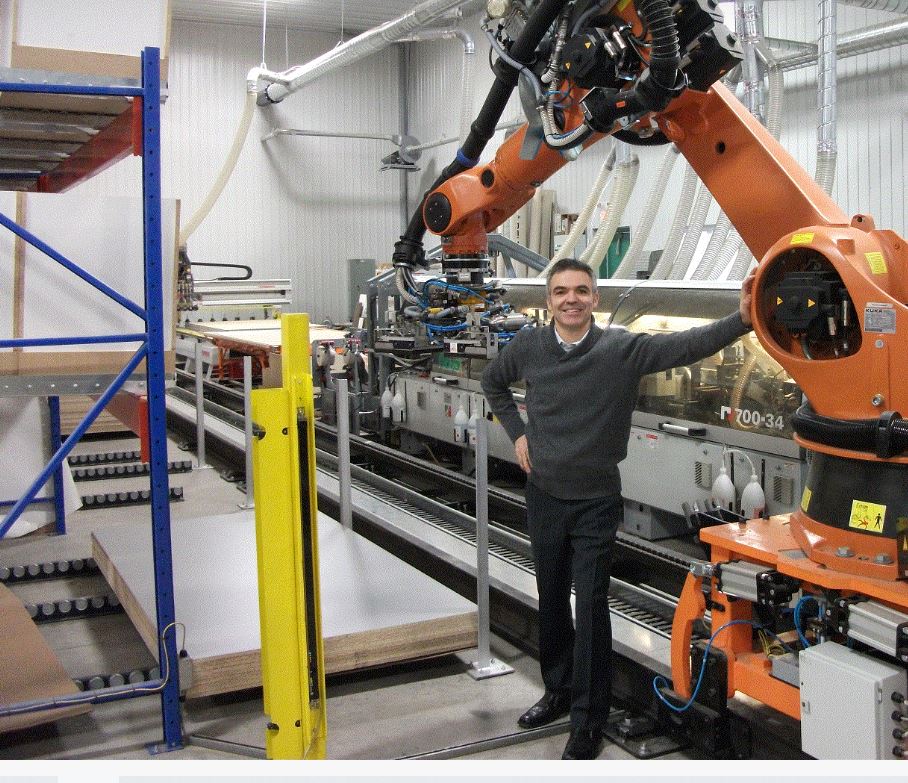
    • Overview of the robotic cut-band-drill-dowel work cell
    • The challenges and opportunities of robotic manufacturing

    Learn more.

    13:00 -- The Rules of the Art of Architectural Woodworking

    Presenter: Jean Michaud, GIS Inspector, Architectural Woodwork Manufacturers Association of Canada

    The North American Architectural Woodwork Standards (NAAWS) define the material and workmanship requirements for the fabrication and installation of architectural woodwork.

    • Overview of the architectural millwork industry, its evolution, and related standards
    • Overview of the NAAWS manual
    • About the AWMAC Guarantee and Inspection Service (GIS) 

    Learn more.

    14:15 -- INOVEM's Robotic Sanding Project 

    Presenter: Nicolas Pearson, Technology Advisor and Business Development, INOVEM

    • The expertise of CCTT INOVEM in a research project
    • Realizing the added value of a research partnership with the CCTT
    • Example of a sanding project using a collaborative robot

    SATURDAY, OCTOBER 29 

    11:00 -- Keynote: The Rules of the Art of Architectural Woodworking

    Presenter: Charles Besmargian Ch, Director General, AWMAC Quebec Chapter

    The North American Architectural Woodwork Standards (NAAWS) define the material and workmanship requirements for the fabrication and installation of architectural woodwork.

    • Overview of the architectural millwork industry, its evolution, and related standards
    • Overview of the NAAWS manual
    • About the AWMAC Guarantee and Inspection Service (GIS) 

    Learn more.

    13:00 -- Tips for Buying Your First CNC Machine

    Presenter: Christopher Mancliere, Senior Software Specialist, Planit Canada

    • Choosing the right CNC machine for your operation -- nesting vs, pod and rails
    • What do you need to set up and run a CNC?
    • What types of software are available to go from design to manufacturing?
    • Operating and maintaining your CNC machine
     
    SIBO 2022 Registration

    About Salon Industriel du Bois Ouvré (SIBO)
    SIBO, historically the most important event for Quebec’s secondary wood products industry, provides an exclusive opportunity for manufacturers and distributors of woodworking machinery, tooling, software, cabinet hardware, lumber and board products, and much more to connect with manufacturers representing Quebec’s $8.2 billion wood products economy.

    For exhibit space and sponsorship inquiries, contact Rob Roszell at rob.roszell@woodworkingnetwork.com or Harry Urban at harry.urban@woodworkingnetwork.com.

    View SIBO 2022 exhibitor prospectus.

    More upcoming Woodworking Network eventsClosets Conference & Expo (CCE) co-located with Wood Pro Expo Florida (WPEFL), April 12-14, 2023, Palm Beach County Convention Center, West Palm Beach, Fla. 

    Wood Machinery & Supply Conference & Expo (WMS), Nov. 2-4, 2023, International Centre, Mississauga, Ontario.

    The World's Largest Collection of 16000 Woodworking Plans!